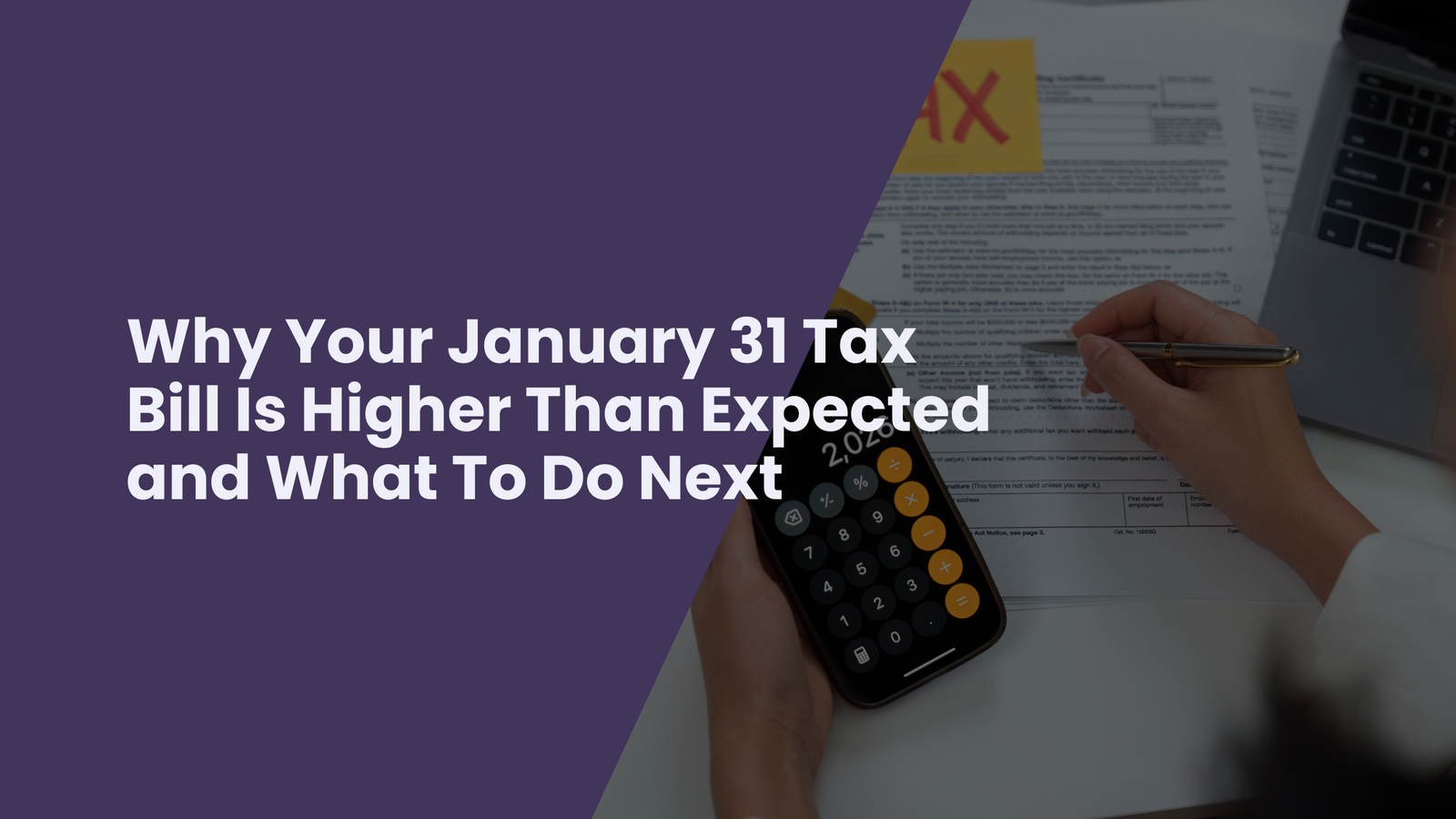
Every year, we see the same message around late January. The tax bill lands. The number feels far higher than expected. Stress kicks in.
If this is you, you are not careless and you are definitely not alone. The January 31 Self Assessment deadline often creates shock because of how the UK tax system works, not because something has gone wrong.
The first step is not panic. It is clarity.
Step One: Understand Why the Bill Is Higher
Before worrying about how to pay, check why the figure looks so large. A few factors regularly catch people out.
Payments on account
This is the biggest surprise for many self employed people. HMRC often asks you to pay part of next year’s tax in advance. That means your bill can include tax for last year plus a deposit for this year. It feels like double, even though it is not.
Higher income than the previous year
Freelancers, consultants, and business owners often have variable income. A strong year means a bigger tax bill. This is a good problem, but it still requires planning.
Student loan repayments
These are calculated through your tax return and can quietly increase the total owed.
Missed expenses or reliefs
Home office costs, mileage, equipment, software, and pension contributions are often underclaimed. It is worth reviewing the calculation carefully.
Log into your HMRC account and view the detailed calculation. Understanding the number reduces the fear around it.
Step Two: If the Bill Is Correct, Know Your Options
Many people assume that if they cannot pay everything immediately, they are in trouble. That is rarely the case if you act early.
Use a Time to Pay arrangement
HMRC allows many taxpayers to set up a monthly payment plan online. If the balance is under the threshold, you can often do this without a phone call. Interest applies, but it is manageable and far better than ignoring the problem.
Reduce future payments on account if income is falling
If you know your current year income will be lower, you can apply to reduce payments on account. This should only be done if it is genuinely justified, but it can significantly ease pressure.
Pay what you can now
Even a partial payment helps. HMRC prefers engagement and a plan over silence.
Step Three: Stop the January Shock From Repeating
The real issue is not one bill. It is unpredictability.
When tax feels like a surprise every year, it usually means there is no forward forecasting, no tax reserve set aside monthly, and no clear view of profits during the year. This is where better systems make a huge difference.
Regular reviews, simple forecasting, and setting aside tax as you earn it turn January from a crisis into a routine payment.
A Final Perspective
A large tax bill usually means your business made money. The stress comes from timing, not failure. Once you understand how payments on account and cash flow planning work, the fear reduces quickly.
We work with freelancers and small business owners to forecast tax, plan payments, and build systems so January stops feeling like a financial jump scare. When the numbers are predictable, decisions become easier and growth becomes calmer.